
On Mothers’ Day 2021, I am republishing this article from 2018, written as a tribute to my wonderful mum who filled my childhood with music and happy times.
I have seen queries from parents wondering how to encourage their child to enjoy classical music. My mum introduced me to classical music in such a subtle way that I was a fan before I knew it. This is how she did it, starting with a few choice records.
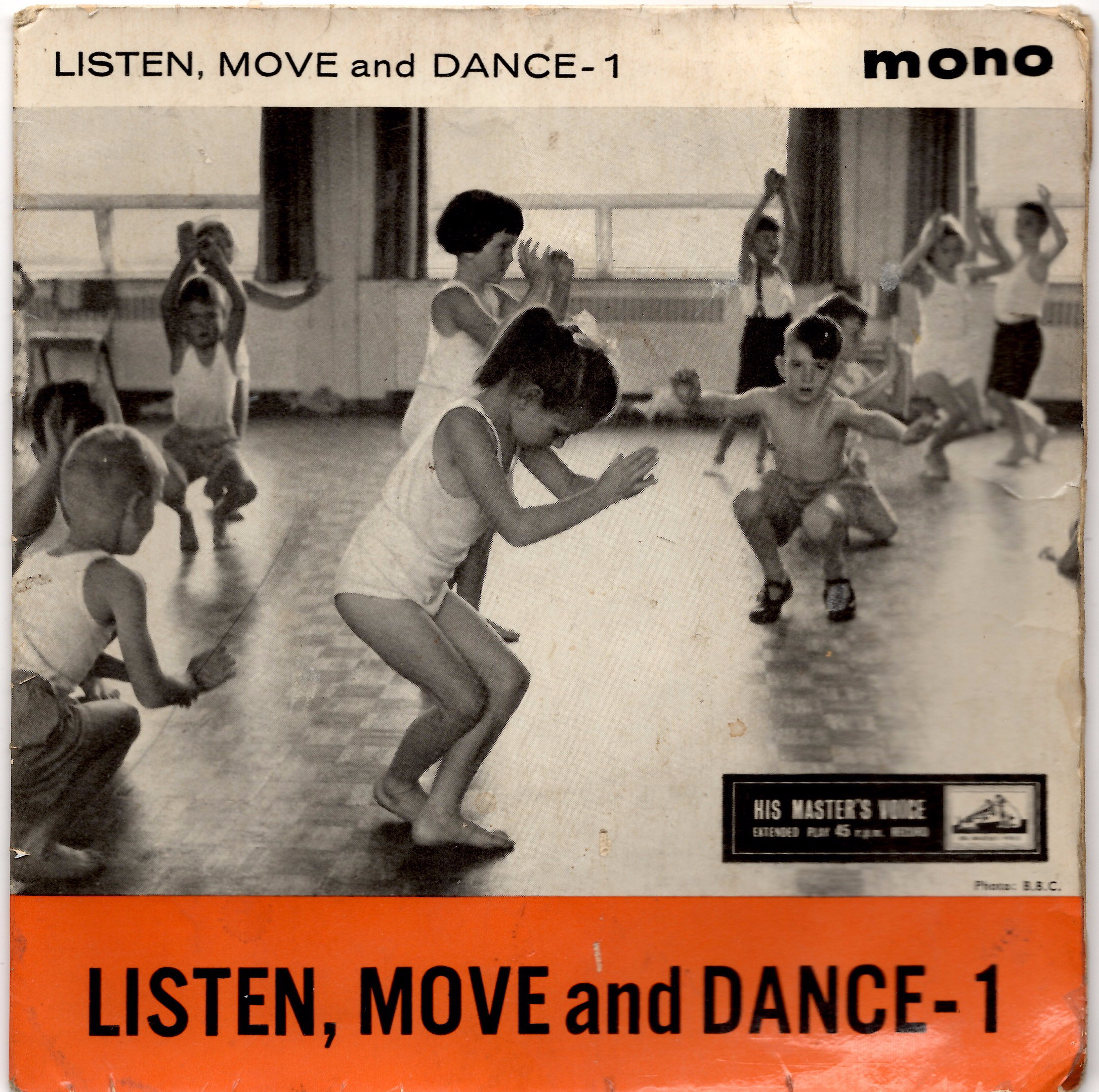
It began with dance. Trained as ballet dancer and teacher, she knew the repertoire that would have my sister and me twirling round the living room. Tchaikovsky: music from ‘Sleeping Beauty’, ‘Swan Lake’ and this Waltz of the Flowers from the ‘Nutcracker Suite’. I loved the sound of the harp swirling up and down, the bubbling clarinet notes and then when the sweeping melody on the strings came, I was spinning with joy.
As children, Mum protected us from scary things so we had no idea that the story behind this next piece involved frightening trolls. In the Hall of the Mountain King from the ‘Peer Gynt Suite’ by Greig had us playing a game, stepping around the room on tiptoe, hiding behind the settee, jumping up and then getting more and more boisterous as the music increased in speed and volume.
Track 2: In the Hall of the Mountain King from the ‘Peer Gynt Suite’.
Music that made us laugh was a also big hit and we thought this Clog Dance from the ballet ‘La Fille Mal Gardée’ was very funny – especially the bit that sounds like slipping on a banana skin and then later, when the sound of the clogs tapping seems to get all mixed up.
Track 3: Clog Dance from ‘La Fille Mal Gardée’.
When she became a primary school teacher, Mum had responsibility for music and dance at the school my sister and I went to so we experienced the music at home and at school. Walking into school assembly we were accompanied by music such as Holst’s ‘The Planets’ or Prokoviev’s ‘Romeo and Juliet’.
Track 4: Jupiter from ‘The Planets’.
Track 5: The Knights’ Dance from ‘Romeo and Juliet’.
Her friend and colleague was a drama specialist and together they put on school plays. Musical soundtracks were drawn from Stravinsky’s music for the ballet ‘Petrouchka’ or ‘The Firebird’, Britten’s Sea Interludes from ‘Peter Grimes’ or Kodaly’s ‘Hary Janos Suite’: music that had character and captured the imagination or had exciting rhythms and/or enticing melodies.
Track 6: Danse Russe from ‘Petrouchka’.
Track 7: Sea Interludes from ‘Peter Grimes’.
Track 8: Hungarian Dance from ‘Hary Janos Suite’.
Mum directed the school choir and when we went in for a music festival singing This Little Babe from Britten’s ‘A Ceremony of Carols’, I remember having to concentrate hard when the music went into two parts and marvelling at the sound created by the echoing effect of this canon.
Track 9: This Little Babe from ‘A Ceremony of Carols’.
The structure of music interested Mum and when she taught dance she was also teaching us to listen. To the second movement of Bartok’s ‘Concerto for Orchestra’ (known as the ‘Game of Pairs’), she asked our class to dance in twos, choosing which instrumental line to follow: you could be the bassoons, the oboes, the clarinets, the flutes, the pizzicato strings, bowed strings, trumpets or trombones but could only move when your instrument was playing.
Track 10: Movement II. Giuoco delle coppie from the ‘Concerto for Orchestra’ by Bartok.

Mum loved discovering new pieces and when we listened to the Nine Lessons and Carols from King’s College, Cambridge, she was always excited to hear the latest addition to the repertoire. When she first heard the Shepherd’s Pipe Carol by John Rutter, she loved the bit where the beat changes and then changes back again. She bought the music and next Christmas we were singing it at school. One year, we went to Cambridge, to the Chapel at King’s College to hear the service. The music was wonderful: the harmonies, the descants and the organ playing. And after all that uplifting music, we came out into the twilight as the snow was beginning to fall. It felt magical and remains a special memory.
Track 11: Shepherd’s Pipe Carol by John Rutter.
Music was like an exciting discovery with Mum. She told us about her music teacher at school in Hendon, London, taking her to orchestral rehearsals with great conductors and how she was told to listen to the bass line or middle parts and not just follow the tune. She revelled in the clever compositional techniques like the melody in Rachmaninov’s Rhapsody on a Theme of Paganini which, towards the second half of the piece, is turned upside down and made into a new melody.
Track 12: Rhapsody on a Theme of Paganini by Rachmaninov.
Or the two tunes played at the same time in the last movement of the St Paul’s Suite by Holst.
Track 13: St Paul’s Suite.
She loved the music of English composers: Purcell, Holst, Vaughan-Williams, Walton and Britten, having heard many of their works in concerts, during the vibrant cultural resurgence of post-war Britain. She talked of the excitement of attending concerts at the Festival of Britain at London’s Southbank. I found a programme that she had kept from one of the first performances of Britten’s opera Billy Budd from 1951.


Perhaps in that spirit of the Festival of Britain, there wasn’t any elitism about this musical education: she felt that everyone should have access to great music. She told me about a boy in school who’d asked her: “Where do you find all this music?”. He’d never heard anything like it at home.
Track 14: The Cuckoo from ‘Folk Songs of the Seasons’ by Vaughan Williams.
Track 15: Popular Song from Facade by Walton.
But we were exposed to an eclectic mix too. We sang along to Pinky and Perky on the TV, and had records of the soundtracks from musicals we’d seen at the pictures: we sang along to A Spoonful of Sugar from ‘Mary Poppins’, My Favourite Things from ‘The Sound of Music’ and I could have danced all Night from ‘My Fair Lady’.
Mum had the record Time Out by Dave Brubeck and we loved listening to that and a record of the jazz trumpeter Dizzie Gillespie. And we loved The Swingle Singers especially when they sang Bach.
Track 16: Allegro from Brandenburg Concerto no.3 by Bach: The Swingle Singers.
My sister and I went for piano lessons, (our brother resisted and taught himself the guitar and drums) and so Mum hardly got a look in at the piano but when she did, this is one of the pieces she used to play: Mouvement Perpetuel by Poulenc. It sounded lively and jolly to me as a child. I didn’t notice the rather dark undertone that I hear when I listen to it now.
Track 17: Mouvement Perpétuel by Poulenc.
When I went secondary school, Mum encouraged me take up the cello – from the back of her wardrobe she took the cello she had been given as a 21st birthday present and said I could learn to play it. So I did, without realising what a gift that was and how it would become my instrument and a major part of my life.
When I was about fourteen, Mum took me to a performance of Bach’s St Matthew Passion in Manchester Cathedral. The timbre of the orchestra and solo singers was startlingly beautiful in that resonant acoustic and when the chorus joined in it was such a glorious sound I was quite overwhelmed. I remember hearing a viola da gamba for the first time and wondering what it was, realising it wasn’t a cello, although it looked similar. I loved its raw sound. At the end of the first half we went home for tea and then Mum asked me if I’d like to go back for the second half. I couldn’t understand why she was asking me, of course I wanted to go back for the second half. Speaking to her years later I was telling her what a powerful effect that music had on me and she said I had been really quiet and she didn’t know if I had liked it or not! I think I had been completely spellbound.
Track 18 – 19 From the St. Matthew Passion by Bach
A few years later Mum was lecturing in education with responsibility for dance at a college of education, working in the field of contemporary dance and we had moved to a cottage in Lancashire. Music was our evenings’ and weekend’s entertainment: we listened to Mum’s records of Copland’s Rodeo, Shostakovich’s Jazz Suite and Satie’s Gymnopodies (in a version for classical guitar).
Track 20: Buckaroo Holiday from ‘Rodeo’ by Copland.
Track 21: Dance 1 from ‘Jazz Suite’ No.2 by Shostakovich.
Track 22: Gymnopodie no.1 by Satie.
She continued to play music that made us laugh. We thought the beginning of Divertissement by Ibert sounded funny with its clashing chords on the piano.
Track 23: Divertissement by Ibert.
As a teenager I started to collect some records of my own: Sibelius Symphonies, Elgar’s Cello Concerto with Jaqueline du Pré as soloist and Bach’s Brandenburg Concertos.
My love for music led to a career in music but more importantly, immense joy from the music I have heard or played and continue to do so. It’s because of Mum’s enthusiasm for music and the way she carefully nurtured an interest during my early years that music became central to my life.
The last piece in this tribute is by Mum’s favourite composer: Ravel. This music is full of poignancy for me as it arouses a complex range of emotions beneath its apparent simplicity.
Track 24: Adagio Assai from the Piano Concerto in G by Ravel.
To hear all the music in full go to my playlist: Thank you for the Music, Mum.
 Liv's Music World