
Edinburgh Fringe 2023: Soloists of the Scottish Chamber Orchestra series – Su-a Lee with Hamish Napier

An absolute gem in this year’s Fringe, this concert showed what fun can be had through creativity and musical collaboration, particularly when the musicians have such admiration and respect for one another as these two: Su a Lee, Assistant-Principal Cellist with the Scottish Chamber Orchestra, well known for her versatility in many genres of music and Hamish Napier, whom she introduced as one of Scotland’s most talented folk musicians and a composer, who also happens to be her husband.

On Saturday afternoon in a packed Northesk Parish Church in Musselburgh, Su-a and Hamish brought us a melding of different styles of music. Scottish folk songs and Hamish’s original compositions were interspersed with the six movements of Bach’s first cello suite.

Su-a Lee opened the concert with a piece for solo cello – an arrangement of Burns’ Ae Fond Kiss by the late Kevin McCrae, her fondly remembered friend and colleague from the SCO, who had introduced Su-a to Scottish traditional music, many years ago. After beginning simply, Kevin’s arrangement weaves the melody into an undulating line, reminiscent of the Prelude from Bach’s first suite. Su-a followed this with that prelude, playing with a wonderful lightness of touch and an airiness in the phrasing.

Hamish then joined the stage at the piano to play two strathspeys with Su-a, including one of his own. The strathspey is a traditional dance style originating from Hamish’s beloved Speyside, where he spent his childhood and now lives. He explained how the landscape of this area inspires many of his compositions. Hamish too, is a versatile musician: singer, pianist and flautist. I was struck by his eloquent voice in Burns’ Silver Tassie and his flute playing in another of his compositions, a hornpipe called The Wee Plank which came with a story involving a stash of cash hidden under a floorboard!

As the programme unfolded, we were drawn into their world as they described their home in the Cairngorms National Park where they lived during lockdown. We heard about the Scots pine under which Su-a played her cello and made several recordings. She chose a piece which Beatrice Harrison famously played outdoors accompanied by nightingales for BBC broadcasts in the 1920s: Songs My Mother Taught Me by Dvorák. The concert had been introduced as ‘impossible to categorise’ but it was still surprising to hear this romantic piece, deliciously played by the duo.

When it came to the Bach Sarabande, Su-a played unaffectedly and finished with a little run at the end that led into to Hamish’s compositions inspired by Scotland’s native trees. And then, as Su-a played the Minuets, Hamish joined in at the piano subtly at first before introducing some lush chords that would have made Bach smile. The final Bach movement for me was perfection, as Hamish seamlessly switched instruments so that flute and cello danced the Gigue together. Genius!

The audience loved it and were treated to two encores with Su-a playing … the saw (!) accompanied by Hamish at the piano. The first was a tribute to their mothers, who were in the audience, and then a piece they had played outside every week during lockdown: Somewhere over the Rainbow. This was astonishing – that a saw can produce such a musical sound – well it can when Su-a is playing it.

The whole programme was crafted so well and played so beautifully, the rapport between them shared so generously that you couldn’t help but come away smiling almost as much as Su-a!
Edinburgh Fringe 2023: Bach’s Cello Suites performed by Anne-Isabel Meyer

Anne-Isabel Meyer’s Bach is still playing in my head, days after her performance of the six suites for solo cello last week. On her annual visit to the Edinburgh Fringe, she performed the complete suites on three consecutive days in the beautiful setting of St Cuthbert’s Parish Church. On the fourth day, she performed the prelude and gigue from each suite, giving the audience a taste of the entire work. 

Meyer went to the heart of each suite, conveying its character, exuberant or sombre, contemplative or joyful. The pairing of the C major with C minor (3 and 5) and D minor with D major (2 and 6) leaving G major and E flat major (1 and 4) for the opener, gave us a great contrast of mood in each concert.

This is the first chance I have had to hear Anne-Isabel Meyer since 2019 and her rich tone seemed even warmer than I remember. It was hard not to well up at the raw beauty of her Sarabande from Suite no. 5. The undulating phrases with open string pedal notes in the first and third preludes built momentum each time her bow touched the open strings and in each movement, she allowed the melodies to sing out freely whilst the underlying harmonies resonated throughout the church.

For me, the beauty of Anne-Isabel’s playing is that the music makes complete sense. Is it because the rise and fall of her phrasing and subtle dynamic contrast sound so natural or because she understands the structure of the whole and never loses sight of it? Whatever it is, I felt uplifted by her lively rhythmic dance movements and at other times felt profoundly moved.

Hearing this music live is good for the soul, it is life affirming and Anne-Isabel Meyer’s performances filled me with optimism, as I stepped out into the bright daylight of the bustling city.

To play the complete Bach cello suites is physically and mentally demanding. Speaking to her afterwards she explained how for her, it comes from the core: the centre of the body. She explained how her Pilates practice enables her to focus on the music rather than the fingers. 

Her gigue from Suite no. 6, full of energy, is playing in my mind right now so although I am inspired to find my core* and resume my own journey with the suites, I’m still enjoying the gorgeous rich sonorities she created. 

*Note to self: look up Pilates classes!

Cellists? Do you ever wish you played the flute?

IMG_20171109_111030911

Whenever I tell anyone that I play the cello they tend to say something like:

“I love the cello, it’s such beautiful instrument.” 

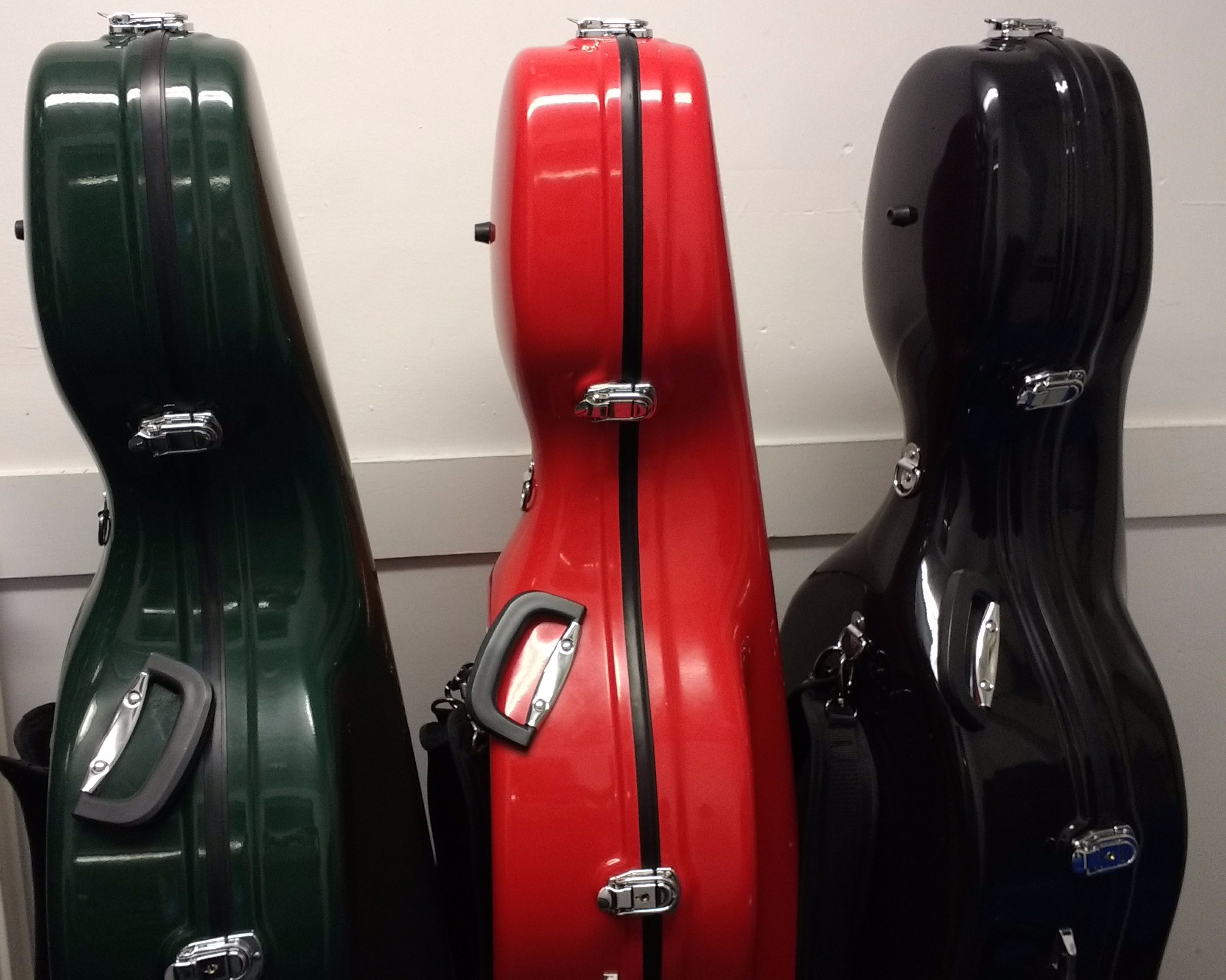
Then I remember how lucky I am.  To play the cello is to love the cello. What I really mean is: you have to love the cello to play it. Is that because of its soulful sound, its potential to express deep emotion? No. It’s because it’s really annoying to carry! And if you do play the cello you will certainly be asked many times over:

“Do you ever wish you played the flute?”

I never thought about whether I loved the cello or not when I began to play. Just before I started secondary school, my mum took out a cello from the back of her wardrobe. I’d never seen it before, even though I’d used that wardrobe many times to play ‘hide and seek’. She said I could learn to play it when I went to my new school. On my first day, the music teacher asked us to write down if we would like to play an instrument and if so what, I wrote down “Yes. Cello.”

But I didn’t really ‘get into’ the cello until I was a teenager and I joined a local youth orchestra. Even though rehearsals were on Saturday mornings – I loved it! I got up early and took two buses, changing at Manchester’s Piccadilly Gardens. The worst thing was, there was really only one seat where I could sit easily with a cello: the first one that has a wider space (designated nowadays as a priority seat). It was usually empty at that time on a Saturday morning but if someone was there, in that seat, I would have to go to the back and risk getting flung across the bus when it went round a corner, hanging on to that cello in its cloth case and terrified that it would get broken.

After rehearsals, seeing as I was in town, I liked to go window-shopping, to a record shop called Rare Records and to Gibbs, a second-hand book shop or go and browse in the music library at St Peter’s Square, except that I had that cello to carry around with me. It was a real nuisance. 

Quite often, I’d get a lift from my mum especially to concerts. One time she had to hire a car as ours had broken down. It was bigger than ours and amazingly the cello fitted into the boot. But when we arrived at the pre-concert rehearsal Mum couldn’t get the boot open. The key didn’t seem to work. She even went to the police to ask if they could get it open for us! But they said these cars have a separate key to open the boot, to make them difficult to break into. We didn’t have another key and there wasn’t time to get one so I had to watch the concert from the audience and not play. Everyone asked me why I wasn’t playing. I was so embarrassed!

Not as embarrassed as I was when I had to go to a different room from usual, for my  cello lessons at school. I had to walk through a classroom full of boys. It was the most excruciating experience, not least because I was shy and skinny, in a frumpy uniform – box-pleated navy skirt and knee length grey socks. I could feel them all watching me and sniggering. It was a few months before lessons resumed in the usual room, to my relief. I couldn’t have done that much longer!

There were many things that could have put me off playing the cello but overriding them all, was the thrill I got from playing the cello in the youth orchestra. We played Liszt’s Hungarian Rhapsody, Brahms’ Academic Festival Overture, Schubert’s Unfinished Symphony and Beethoven’s Fifth. I didn’t always understand the notation but learnt to copy the other players. I was in awe of the first clarinettist and first oboe-player playing their impressive solos but was glad I belonged in the security of the cello section and loved being part of the full-orchestra sound with strings, woodwind, brass and percussion in full force.

I’d go home and tell Mum all about it, singing the cello part! And she’d say, “that doesn’t sound like the tune, what does the tune go like?” I had concentrated so hard on learning the cello part, I thought that was the tune!

A turning point came when on one of my trips to Rare Records I bought an LP of Elgar’s Cello Concerto in a famous recording by Jacqueline du Pré. I listened to it over and over and fell in love with it … its dramatic opening, soul searching phrases and soaring melodies. “So that’s what a cello’s meant to sound like!” Years later, studying for my degree, when my teacher suggested I learn the Elgar for my performance exam, I was so excited, I rushed off up town, straight away, to buy the music. And as I swept my bow across those opening chords, I was in my element. Nothing was ever going to put me off playing the cello! Do I wish I played the flute? Not in a million years!

Receive new posts from Liv’s Music World by adding your email address below.