A gathering of musicians around the world is to unite on Sunday 11 November 2018, marking the centenary of the Armistice by playing together via social media. (See my previous post: Piece for Peace). Yesterday, the Edinburgh Chinese Music Ensemble met to prepare and record its contribution to the event: a version of ‘Armistice’ by Thoren Ferguson played on Chinese instruments.
Our ensemble is made up of a group of mostly Edinburgh-based musicians who enjoy playing Chinese music. It is a mix of people from Hong Kong, England and Scotland who are Edinburgh residents and people from China who have come to Edinburgh to study. The youngest player is at secondary school and the oldest is retired and the languages spoken in rehearsals can be a mayhem of Cantonese, English, Mandarin and of course Scots. Calm is restored when we play music together!
We have enjoyed preparing for this event and sharing our thoughts about WWI. For me, the fact that my grandmother’s fiancée was killed in France a few days before peace was declared is particularly poignant.
Here are some photos from our recording of Armistice. Our video is be uploaded to Facebook on 11.11.18 at 3pm (GMT).
When I first started teaching cello in a primary school, I decided to start a cello ensemble so the children could experience the fun of playing music together. Conducting the cello ensemble was actually more fun than making small talk in the rather staid staff room at lunch time. I was surprised by the reaction of the deputy head who told me that I shouldn’t work through my break and that I was ‘cello mad’!
“Well, what’s wrong with that”, I thought, “I am the cello teacher, of course I’m ‘cello mad’!” Since that day, I have always encouraged my students to play in cello ensembles as it is a great way to give them the melodic lines that they don’t always get in other types of ensemble. Soon after I started teaching, in one of my secondary schools, I had a wonderfully musical group of pupils who played well in tune and beautifully in time together. I arranged some pieces for them to perform in a school concert and was feeling really pleased with their sensitive interpretation. My colleague warned me: “You won’t always get pupils to play like this. They are quite exceptional.” He was right, they were exceptional, but that didn’t stop me starting many more ensembles some of which turned out to be just as accomplished.
Whether they are accomplished or not isn’t the point though. Feeling that thrill and the camaraderie that comes from playing music together is what it is about. What can work really well is to have an ensemble that includes all the cello and double bass pupils in a school. The less experienced players can play an easy part but still have the fun of joining a big cello/bass family and being part of a lovely, lush sound.
We are in good company: there’s ‘The 12 cellists of the Berlin Philharmonic’ who have produced several CDs of lush sounding arrangements for cellos, as have ‘The London Cello Sound’ (made up of 40 cellists from four London orchestras). There are countless amateur and professional cello ensembles on You Tube including the smallest group possible: two. The internationally famous Croatian duo ‘2Cellos’: Luka Šulić and Stjepan Hauser play classical, pop, rock and film music in performances that combine virtuosity with light-heartedness. Here they are playing music from the film Pirates of the Caribbean. Some of their arrangements are available to buy and can be played by at least four cellos by splitting the double-stopping in each part.
From the smallest ensemble to one of the largest: cellist and composer Giovani Sollima gathers an ensemble of 100 cellos. When I first saw Sollima with his various ensembles of cellists on You Tube I felt I had found a kindred spirit. If an internationally famous composer and cellist can have fun playing alongside his ensemble of students then so can I. There are silly moments in some of the performances, including one where they confront that annoying dilemma of how to turn a page whilst playing the cello. Sollima makes a humorous feature of this, as they all stop playing and turn their pages at once – noisily! Watching these clips, I think Sollima would certainly qualify as ‘cello mad’!
For any other ‘cello mad’ people out there, here’s my list of great cello ensemble music:
Bachianas Brasilieras by the Brazilian composer Hector Villa-Lobos who was also a cellist. No. 1 is scored for an orchestra of cellos and no. 5 for soprano and 8 cellos. Here’s the first part of no 5:
Fratres for 4, 8 or 12 cellos by Estonian composer Arvo Pärt. There are many versions of this piece which makes use of harmonics to produce bell like effects.
Concerto in G minor for 5 cellos by Joseph Bodin de Boismortier (Publisher: Kunzelmann). This is one of three Concerto Grossi, with cellos 1 – 3 playing concertino parts and the other two forming the ripieno. I have used this with a school cello group which had 3 advanced players. All parts are in tenor clef.
Violoncelles, vibrez! by Sollima for 8 cellos. It is named after the words his cello teacher, Antonio Janigro, used to say to his students: instructing them to make their cellos vibrate. There are two solo parts, with lots of slides to the end of the fingerboard and there are several versions: with string orchestra or cello ensemble of 4, 6 or 8 cellos. Here it is with Sollima himself and 100 Cellos:
Concerto in G minor for 2 cellos and string orchestra (or piano reduction) by Antonio Vivaldi. This is an exciting piece with lots of imitation, great fun for two advanced cellists.
Sonata in G minor (Opus 2 no. 8 ) for 2 cellos and harpsichord/piano by Handel. This is a gorgeous cello-friendly piece.
Violin Phase by Steve Reich. For people who have no friends there’s no need to miss out on the ensemble playing experience! Here’s a video of Steve Reich’s Violin Phase arranged for cello. The skill required to play this music is immense in terms of concentration as one part goes out of time with the next creating that phased effect.
Cello Counterpoint for 8 cellos, a fiendishly difficult piece by Steve Reich which you can play with a soundtrack of the other parts already recorded.
Obviously any music can be arranged for cello ensemble and if you make arrangements yourself, you can tailor them to the level of playing of each player, adding double bass parts if required: perfect for school ensembles.
Here’s a couple of examples of effective arrangements for cello ensemble: firstly, the Prague Cello Quartet with The Phantom of the Opera:
And the Waltz from Shostakovich’s Jazz Suite played by Cellostrada.
The following pieces can be played by an intermediate school group:
Pavane by Arbeau arranged by Anita Hewitt-Jones (Musicland). My students love playing this piece.
Three Pieces for Cello Ensemble arranged by Robin Erskine (Lomond Music). Another favourite amongst my students this album contains three pieces: Mattachins, The Handsome Butcher and Little Brown Jug, in easy arrangements.
The Scots Cello Book1 edited by David Johnson has five short tunes arranged for cello duet and four tunes for cello quartet.
Early Pieces for two and three cellos, edited by PEJTSIK Arpad (Editio Music Budapest). This album contains lots of short attractive pieces by various composers including Purcell, Telemann, J.S.Bach, Couperin, Haydn, Mozart and Beethoven
Four Pieces for Four Cellos arranged by Doreen Smith (OUP). A very useful book with attractive arrangements of pieces by Byrd, Mozart, Tchaikovsky and Berlioz.
Deux Danses by Bruce Fraser (Lomond Music). Two exciting movements for cello quartet.
18 Duets for Two Cellos by Bartok (Universal Edition).
Renaissance Tunes arranged by Marco Pallis (Thames). For two cellos.
The following are for groups with three players above grade 5 standard:
The Entertainer by Scott Joplin (Kunzelmann) arranged for four cellos.
Canon in D by Pachelbel arranged by Aaron Williams (Ricordi). One person has to volunteer to play the ‘ground bass’ – the same four bars over and over. The other three parts are in tenor clef but could be transcribed into bass clef.
The following pieces are written with a dedicated double bass part.
6 Sonatas for 3 cellos and double bass by Wagenseil. (Doblinger).
Duetto for cello and bass by Rossini (Yorke Edition).
Duet in G minor for cello and double bass by Cherubini (Music Unlimited).
For younger players:
Threes and Fours by Sheila Nelson (Boosey and Hawkes).
Lollipops (Duets) by Anita Hewitt-Jones (Musicland).
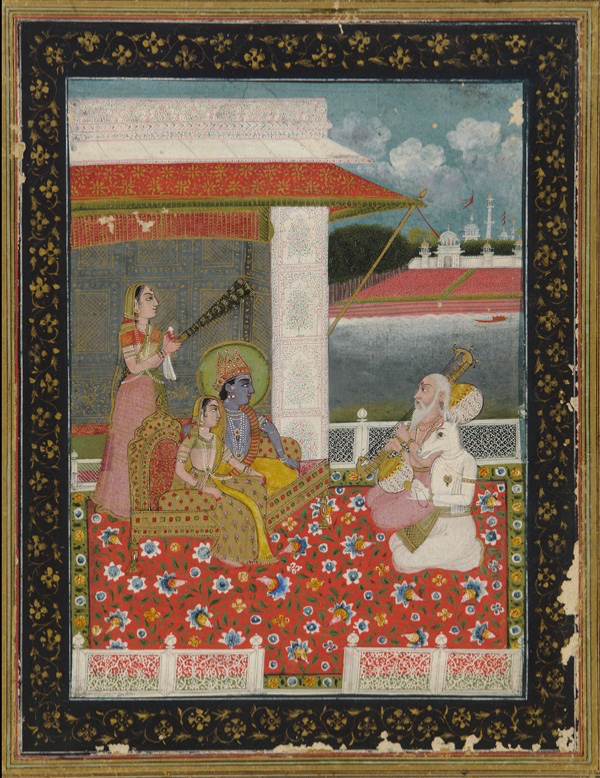
My journey is metaphorical and takes place over a number of years. It starts with a jangling sound on a Beatles song. It is a bit like a guitar but has a different feel, I’m interested in the sound which comes from another place, another continent. It is a sitar, I discover: an instrument that epitomises the sound of Indian classical music. Over the years, I listen to the instrument many times: Ravi Shankar in the film of the Monterey Pop Festival and the famous televised performance of Ravi at the Concert for Bangladesh, where the crowd applaud his tuning up. Then years later, on late night journeys back from gigs, my car radio tuned to Late Junction on Radio 3, a rendition of an Indian Raga makes compelling listening for my drive home. I notice it starts very slowly with no discernible beat and then the tabla (drum) joins in and the piece builds up speed and becomes incredibly virtuosic. With increasing momentum and excitement, it finishes with a flourish played three times over.
I am drawn to this music but have yet to comprehend or appreciate its depths at this stage in my Indian journey. Each time I hear this music, I have a feeling of impatience during the slow part, I’m waiting for the tabla to join in and for the fast sections which capture my imagination and take me to a different place. In 2002, I venture with some trepidation to an all-night Indian concert at Edinburgh’s Usher Hall. I do not expect to stay awake. The concert starts at 10pm and the programme is to begin with ragas for night time, then move to ragas for late night and finish with early morning ragas. I feel as if I am going on an adventure as I listen to this music of changing moods and as the night progresses, I become increasingly absorbed in the performance. It is surprising and entertaining, so much is going on: not just the music but the interaction between musicians, and between musicians and audience, expressed in body language, gesture, clapping and vocalising. The musicians on stage show appreciation of each player’s performance by shaking their heads, left and right as if saying “no”. I am confused by this, as the music sounds perfect to me, I wonder why they are shaking their heads and only find out later what it means. There are three renowned soloists, taking to the stage in turn throughout the night, Amjad Ali Khan, sarod player, Hariprasad Chaurasia flute player and Shruti Sadolikar, singer. They sit on Indian rugs on a raised platform with two tabla players and two players of a stringed instrument that looks like a sitar but with only four strings and no frets. This instrument is a tanpura, which provides a drone: the players simply stroke the four strings throughout the performance creating an ambient resonance for the melodies unfolding above it. After each slow section, the tabla players introduce a beat and the music starts to accelerate. I witness the tabla-players in turn repeating the melody that has just been played or sung in what seems like a copying game: no matter how fast and complex the melody, the tabla-players always play it back. Passing the melodic line between them in call and response, the musicians reach heights of virtuosic invention and then with a nod between them, they return to playing together and finish with an accelerating phrase repeated three times. It is so exciting that by 6am I am totally captivated, buzzing and more awake than I had been at the start.
My Indian journey progresses in 2009 when I join a sitar class run by an advanced student (who like me is from a Western music background) and I begin to gain an insight into Indian classical music (more specifically North Indian or Hindustani music). I am studying this class as part of my research into learning and teaching but the music becomes the thing I am fascinated by and I continue to play after my research finishes. I take part in workshops with our guru, Mehboob Nadeem, whose teaching stretches my playing. I am concerned about my ability to memorise, but it is the norm to learn by listening and copying, so with guruji’s patience and much repetition, I start to learn a melody in Rag Yaman, an evening rag with a sharpened fourth note. I learn to play alap, which is an improvised, slow, unfolding of the notes of the rag, and I come to appreciate the meditative nature of this part of the music. I learn to play rags with different tunings and characteristics: Rag Bhairivi and Rag Madhuvanti. I take part in a public performance with my fellow students. It feels strange to prepare for a concert without knowing beforehand exactly what I will play because it is mostly improvised. I have difficulty following the cycle of beats played on the tabla whilst I am improvising. I think I need to learn more about tal (the Indian system of beats).
After a few years down this route, I start to learn to play the tabla, attending a SOAS summer school with Sanju Sahai and then joining a class in Edinburgh with Vijay Kangutkar who has been bringing Indian Classical music to Scotland for many years, through his teaching in Edinburgh and Glasgow and his performances with Tabla Alba.
Through Tabla Alba, I enter a world of Indian classical music through the concerts they organise. I become acquainted with the rudra veena, a precursor of the sitar, with a deeply serious, almost reverential sound. Then I hear a sarangi, a bowed stringed instrument with an extremely resonant sound that I love and really want to play until I find out you have to slide your fingernails along the string to play it. Ouch!
I feel I have arrived when I hear two of the ‘rock stars’ of Indian classical music, in concerts at the Edinburgh International Festival, that I have previously only heard on You Tube or television or radio: Ravi Shankar, aged 91, who gives a stunning performance of impressive virtuoso playing and the equally revered maestro of the tabla, Zakir Hussain, who gives a fascinating talk/performance explaining role of the tabla in Indian music and demonstrating its versatility and astonishing range of sounds. Anoushka Shankar (Ravi’s daughter and pupil) also gives a concert in Edinburgh, taking the music in a different direction with a fusion of Indian music and Spanish Flamenco.
Later I discover, at London’s Darbar Festival, an ancient and pure form of Indian classical music played on an unusual Indian instrument, the surbahar, which is like a huge sitar with a very deep sound. The performance is of druphad, a very serious style, the origins of which can be traced back thousands of years. The alap lasts well over an hour and tests even the most devoted listener. I drift away a few times during the performance and realise how much I still have to learn.
Early on in my journey into this world of Indian classical music, I had interviewed an Indian singer, Prakritti Dutta. She explained that you could learn the notes of an Indian raga in one day but to learn a raga really, to understand a raga, to get to know the soul of a raga takes years and years.
My journey continues…
Meanwhile…
As part of the National 5 music curriculum in Scotland, students learn about Indian classical music. They have to identify characteristics of the music so, because of my interest in and experience of Indian music, I was asked to bring in my sitar and tabla to a local school to give them some first hand experience. I talked about the drone and set my virtual tanpura/drone app and played alap in rag bhairivi. I talked about the tuning for different rags and about performing rags for different times of the day. I played the tabla, showing them tintal: the most common musical metre, a cycle of sixteen beats. When I told them about some of the concerts I had been to (Ravi Shankar, Zakir Hussain, Anoushka Shankar, Kaushiki Chakraborty and the all-night concert mentioned above) the students wondered how I heard had about them. They’d not seen any Indian classical concerts being advertised. So I recommend subscribing to the mailing list of Tabla Alba for Indian music in Scotland and Darbar Festival for Indian music in London and in the meantime, there is a wealth of Indian music on You Tube.


 Liv's Music World